

Introduction
Alberta winters can be hard on every part of a home’s exterior. Between heavy snowfall, freezing temperatures, changing weather conditions, and repeated freeze-thaw cycles, eavestroughs and their attachment points can face extra strain during the colder months.
A gutter system may look perfectly secure in the fall, but winter conditions can reveal problems that were already developing. Loose fasteners, worn attachment points, damaged fascia, or sections that have started pulling away from the roofline may become more noticeable when snow and ice accumulate around the eaves.
For homeowners in Calgary, Edmonton, and surrounding Alberta communities, understanding how winter conditions can expose weak gutter attachments is an important part of seasonal exterior maintenance. A gutter that is no longer firmly secured may not direct water away from the home properly, and a loose section can become a bigger repair concern if the problem is left unattended.
The key is to recognise the warning signs before winter conditions make an existing issue harder to address.
How Snow and Ice Can Put Extra Pressure on Eavestroughs
Eavestroughs are designed to collect rainwater and melting snow from the roof and direct it towards the downspouts. Their ability to do this depends on more than the gutter material itself. The system also needs secure fasteners, properly supported sections, sound fascia, and suitable positioning along the roofline.
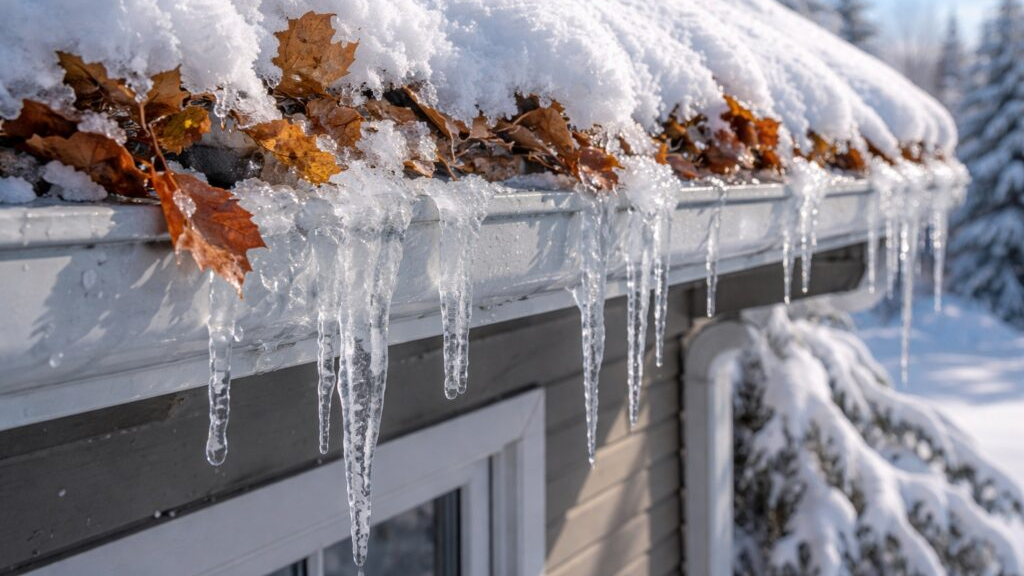
During an Alberta winter, snow and ice can change the conditions around the roof edge. Snow may accumulate near the eaves, melt during warmer periods, and freeze again when temperatures drop. Ice can also develop around gutter edges and downspout outlets when water cannot drain away freely.
These conditions can expose weaknesses in the way an eavestrough system is attached.
For example, a section that is already held by loose fasteners may become more noticeable when additional weight or movement affects the gutter. A connection that has started pulling away from the fascia may open up further, while an older or damaged section may struggle to remain properly aligned.
It is important to understand that roof snow load and gutter loading are not exactly the same thing. The amount of snow on a roof does not automatically translate into an equal load on the eavestroughs. However, snow accumulation, melting water, ice formation, and existing drainage problems can all contribute to conditions that expose weak attachment points.
For a closer look at how changing temperatures affect exterior drainage, homeowners can also read How Alberta Freeze-Thaw Cycles Affect Exterior Drainage Systems.
Why Weak Gutter Attachments Often Go Unnoticed Before Winter
One reason gutter attachment problems can be difficult to identify is that they may develop gradually.
A fastener can loosen over time. A gutter section may begin to sag slightly. Fascia boards can deteriorate, or a joint may shift after repeated exposure to changing weather. These issues do not always cause an immediate drainage problem, so homeowners may not notice them during ordinary rainfall.
The first signs can be subtle:
A small gap between the eavestrough and the fascia.
A section that appears lower than the rest of the gutter run.
Visible movement when water is flowing through the system.
Fasteners that look loose, uneven, or partially pulled out.
A gutter that no longer follows a consistent line along the roof edge.
Water escaping from a joint or collecting in an area where it should drain away.
During warmer months, these problems may seem manageable. Winter conditions can make them more obvious, especially when ice or trapped debris affects the way water moves through the system.
That is why a visual inspection before the snow arrives can be worthwhile. Finding a loose section in fall is generally easier than discovering that the same section has shifted or separated during a cold spell.
Homeowners can also explore Why Seasonal Gutter Inspection Is a Lifesaver for Alberta Homes for more information about checking their gutter systems throughout the year.
5 Signs Your Eavestrough Attachments May Be Weak
Homeowners do not need to dismantle their gutter systems to notice potential attachment problems. A careful look from ground level can reveal several warning signs.
1. The Gutter Is Pulling Away From the Fascia
One of the clearest signs of a possible attachment issue is a visible gap between the back of the eavestrough and the fascia board.
This may indicate that fasteners have loosened, the supporting material has deteriorated, or the gutter has shifted out of position. Even a small gap deserves attention because it can affect how securely the section is held in place.
If the gap appears to be getting wider or extends along several parts of the gutter run, it is worth arranging a closer inspection.
2. The Eavestrough Looks Saggy or Uneven
A properly installed gutter should maintain a consistent position and suitable slope towards its outlet.
If one section dips noticeably, it may indicate a problem with the supports, fasteners, or alignment. Sagging can also occur when wet leaves, dirt, and other debris remain trapped inside the gutter.
During winter, an uneven section can make drainage less reliable. Water may collect in low spots instead of moving towards the downspout. If that water freezes, the existing drainage issue can become more difficult to manage.
For more information about why gutter positioning matters, read The Importance of Proper Gutter Pitching in Alberta's Climate.
3. Fasteners Appear Loose or Missing
Gutter fasteners help hold the system against the fascia. If they become loose, damaged, or detached, the eavestrough may no longer have the support it needs.
From the ground, homeowners may notice a fastener sitting at an unusual angle, a visible hole, or a section that appears to be separating from the house.
Do not attempt to pull, push, or reposition a loose gutter while standing on an unstable ladder, particularly in icy conditions. A professional inspection can help determine whether the issue involves the fasteners, the fascia, or the gutter itself.
4. Water Spills Over the Gutter Edge
Overflowing water is not always an attachment problem, but it can reveal conditions that place additional strain on the system.
Leaves, dirt, pine needles, and other debris can restrict water movement. A blocked downspout can also prevent water from leaving the gutter properly.
If water repeatedly spills over the edge, check whether the system is visibly sagging or separating from the fascia. The overflow may be related to a blockage, an alignment issue, or more than one problem at the same time.
Homeowners can learn more about identifying these problems in How to Spot Gutter Leaks After Heavy Rain in Calgary and Edmonton.
5. The Fascia Looks Damaged
The gutter is only as secure as the surface supporting it.
If the fascia behind the eavestrough is damaged or deteriorating, fasteners may not hold as firmly as they should. Signs such as visible deterioration, peeling paint, soft-looking wood, or gaps around the attachment area deserve attention.
Simply tightening a fastener may not solve the problem if the supporting fascia is already damaged. The condition of the attachment surface should be assessed before deciding on a repair.
Why Fascia Condition Matters as Much as the Gutter Fasteners
When a gutter begins to pull away from the house, it is easy to assume that the fasteners simply need tightening. However, the problem may be with the fascia supporting the gutter.
Fascia runs along the lower edge of the roof and provides a mounting surface for the eavestrough. If the underlying material has deteriorated, even a replacement fastener may not provide a secure hold.
This is particularly important when assessing older gutter systems or areas that have experienced ongoing moisture exposure.
Gutter Doctor identifies pulled-away gutter nails, sagging eavestroughs, soft or decayed wood, and persistent water dripping behind gutters as possible signs of fascia damage. The company also notes that water-damaged or deteriorated framing may need to be replaced to provide a solid supporting surface.
That is why a proper repair should look beyond the visible gutter section. The condition of the fascia and the attachment points should be considered together.
For more information about professional fascia and soffit repairs, homeowners can explore the services offered by Gutter Doctor.
The article Why Soffit and Fascia Services Are So Important for Roof Ventilation also explains why these exterior components deserve attention as part of regular home maintenance.
What Happens When a Gutter Section Becomes Detached?
A loose gutter is not just a cosmetic concern. When an eavestrough section moves out of position, it may no longer collect and direct water as intended.
The exact consequences depend on where the problem occurs and how much of the system is affected, but several issues may follow.
Water Can Escape Behind the Gutter
If the eavestrough separates from the fascia, water may run into the gap instead of flowing through the gutter towards the downspout.
Repeated moisture exposure can affect the surrounding roof-edge materials. If the fascia is already deteriorating, continued water exposure may make the problem more difficult to repair.
Drainage Can Become Less Reliable
A gutter that has shifted or sagged may no longer maintain the intended slope. Water can collect in low areas instead of travelling towards the outlet.
This can become especially troublesome when temperatures fluctuate. Water that remains trapped in the system may freeze, restricting drainage further.
Loose Sections May Need More Extensive Repairs
A small attachment issue does not automatically mean the entire gutter system needs replacement. However, leaving a loose section unattended can allow the problem to develop.
A repair may involve securing the gutter again, correcting its position, addressing a damaged section, or repairing the fascia behind it. The right approach depends on what has caused the attachment to fail.
Gutter Doctor provides gutter repairs that include loose gutter re-attachment, leak and joint repairs, and fascia and soffit repairs.
Homeowners who want to understand when a repair should not be delayed can also read Eavestrough Repair: How to Recognise Damage Before It's a Problem.
Why Blocked Eavestroughs Can Make Attachment Problems Worse
Snow and ice are not the only winter concerns. Debris left inside the eavestroughs can also interfere with drainage.
Leaves, twigs, dirt, and other buildup can restrict the movement of water. When a downspout is blocked, water may have difficulty leaving the system.
During warmer periods, trapped water and wet debris can contribute to extra weight inside the gutter. When temperatures fall, remaining water may freeze and create further drainage difficulties.
If the gutter already has loose fasteners or a damaged supporting surface, these conditions can make an existing weakness more noticeable.
This is one reason cleaning and repairs should not be treated as completely separate maintenance tasks. A gutter may need debris removed, but it may also need an inspection for loose attachments, sagging, leaks, or other visible damage.
Gutter Doctor offers seasonal eavestrough cleaning and downspout clearing, alongside gutter repair and re-attachment services.
Homeowners can also read The Importance of Regular Eavestrough Cleaning in Edmonton to understand why keeping gutters clear matters.
How to Check Gutter Attachments Before Alberta's Winter Sets In
A simple visual check in fall can help homeowners identify problems before winter conditions make exterior work more difficult.
You do not need to climb onto the roof or handle the gutter to look for warning signs. Start from a safe position where you can see the roofline clearly.
Here is what to look for.
1. Check the gutter line
Look along the length of each visible eavestrough. Does it appear straight and consistently positioned, or are there sections that dip, twist, or pull away from the house?
2. Look for gaps near the fascia
Pay attention to areas where the back of the gutter appears separated from the roof edge. A visible gap may indicate loose fasteners or deterioration behind the gutter.
3. Notice any sagging
Compare the gutter sections along the same roofline. A section that sits noticeably lower than the rest may have an attachment or support issue.
4. Look for signs of water escaping
Water stains, dripping behind the eavestrough, or overflow marks can indicate drainage or connection problems that deserve a closer look.
5. Check the downspout outlets
Make sure there are no obvious signs of blockage or damage around the outlets. A drainage problem at the downspout can affect how the entire gutter system performs.
6. Pay attention to previous problem areas
If a section has needed repairs before, check whether it still appears secure and properly aligned. Recurring movement or sagging may indicate an underlying issue that has not been fully addressed.
If you notice a loose section, avoid trying to push it back into place. Gutters can be unstable, and working around roof edges or icy surfaces creates unnecessary risks. A professional can assess the attachment and determine what needs to be repaired.
For a broader seasonal review, homeowners may also find What Should Calgary Homeowners Check Around Their Eavestroughs Before the First Snowfall? helpful.
Should You Repair Loose Gutter Attachments or Replace the Entire Eavestrough?
Not every loose gutter needs to be replaced.
If the issue is limited to a particular section and the gutter material and supporting fascia are in suitable condition, re-attaching or adjusting the affected area may be an option.
However, replacement or more extensive repairs may be worth considering when there is widespread deterioration, repeated separation, damaged gutter sections, or supporting fascia that can no longer hold the system securely.
The important thing is to identify the actual cause rather than treating every loose gutter as a fastener problem.
A professional assessment can help establish whether the issue involves:
Loose or damaged fasteners.
A gutter section that needs re-attachment.
Incorrect or uneven gutter positioning.
Leaking joints or damaged connections.
Deteriorated fascia behind the gutter.
A section that is too damaged to repair effectively.
Gutter Doctor offers new and replacement 5-inch and 6-inch gutter systems, along with repair services that include re-attachment, re-sloping, and fascia and soffit repairs.
Homeowners considering a larger upgrade can explore eavestrough and downspout installation to learn more about the available installation services.
For additional guidance, Should You Replace or Repair Your Gutters Before Fall in Alberta? discusses some of the considerations involved in deciding between repair and replacement.
The right solution depends on the condition of the existing system and the extent of the damage.
A Practical Pre-Winter Gutter Maintenance Checklist for Alberta Homeowners
Before winter settles in, take some time to review the condition of your eavestroughs and downspouts.
Use this checklist as a starting point:
Look for gutter sections that appear to be pulling away from the fascia.
Check for sagging or uneven gutter runs.
Look for visible gaps around attachment points.
Check for signs of damaged or deteriorating fascia.
Look for water stains or evidence of leaking behind the gutters.
Make sure the eavestroughs are not visibly packed with leaves and debris.
Check that downspout outlets are not visibly blocked.
Look for signs of previous repairs that may need attention.
Arrange professional help for loose, damaged, or difficult-to-access sections.
Cleaning is also an important part of the seasonal routine. Gutter Doctor recommends cleaning eavestroughs at least twice a year, generally in late spring after seeds and blossoms have dropped and in late fall after leaves have fallen. Homes surrounded by mature trees may need an additional cleaning during the summer.
Keeping the system clear helps water move through the eavestroughs and downspouts as intended. However, cleaning alone will not correct loose attachments, damaged gutter sections, or deteriorated fascia.
For more seasonal maintenance guidance, read Creating a Year-Round Exterior Maintenance Checklist for Alberta Homes.
Why Professional Gutter Repairs Matter Before Heavy Snowfall
Gutter attachment problems are not always easy to assess from the ground. A section may look slightly uneven, but the actual issue could involve the fasteners, the fascia behind the gutter, or the way the system has been positioned.
Professional attention can help identify the source of the problem and determine whether the gutter needs re-attachment, adjustment, or a more extensive repair.
This is particularly useful before winter, when cold temperatures, snow, and ice can make exterior maintenance more challenging.
For homeowners in Calgary, Edmonton, and surrounding Alberta communities, addressing visible gutter problems before winter is a practical way to stay ahead of seasonal maintenance.
Gutter Doctor provides eavestrough installation, cleaning, and repair services, including loose gutter re-attachment and fascia and soffit repairs. The company serves homeowners throughout Calgary, Edmonton, and nearby Alberta communities.
You can learn more about the company's gutter services and exterior repair services.
Frequently Asked Questions
Can heavy Alberta snowfall pull gutters away from a house?
Snowfall alone does not determine whether a gutter will detach. The condition of the gutter, its fasteners, supporting fascia, and overall installation all matter. Snow and ice-related conditions can expose existing weaknesses, particularly when a gutter is already loose, sagging, or damaged.
How can I tell if my gutter fasteners are failing?
Look for visible gaps between the gutter and fascia, sagging sections, uneven positioning, or fasteners that appear loose or partially pulled out. These signs may indicate that the attachment needs professional attention.
Can loose gutter attachments be repaired without replacing the entire system?
Yes, in some cases. If the problem is limited to a particular section and the surrounding gutter and fascia are in good condition, re-attachment or adjustment may be possible. More extensive damage may require additional repairs or replacement.
Why should fascia be checked when repairing a loose eavestrough?
Fascia provides the supporting surface for the gutter. If the fascia is soft, deteriorated, or damaged, simply tightening or replacing a fastener may not provide a secure attachment. The supporting material may need repair before the gutter can be properly secured.
Can clogged eavestroughs contribute to gutter sagging?
Yes. Wet leaves, dirt, and other trapped debris can add weight to an eavestrough. If the gutter already has weak or loose attachments, the additional weight may make the sagging more noticeable. Blockages can also interfere with drainage.
Is fall a good time to inspect gutter attachments in Alberta?
Yes. Fall is a practical time to look for loose fasteners, sagging sections, damaged fascia, and drainage problems before winter conditions make repairs more difficult. It is also a suitable time for seasonal eavestrough cleaning after leaves have fallen.
Should I try to reattach a loose gutter myself?
It is safer to have a professional assess the problem, particularly if the gutter is high above the ground or the area is difficult to access. Working around roof edges, ladders, snow, or ice can be dangerous. The issue may also involve damaged fascia rather than just a loose fastener.
Does Gutter Doctor repair loose gutters in Calgary and Edmonton?
Yes. Gutter Doctor lists loose gutter re-attachment among its repair services and also provides fascia and soffit repairs, leak and joint repairs, and eavestrough installation. The company serves Calgary, Edmonton, and surrounding Alberta communities.
Get Your Gutter Attachments Checked Before Winter
Alberta's winter weather can reveal problems that may have gone unnoticed during the warmer months. Loose fasteners, sagging eavestroughs, and deteriorating fascia are worth addressing before snow and ice become part of the picture.
A quick visual check can help you spot early warning signs, but a professional assessment is the best way to understand what is happening behind a loose or uneven gutter section.
If your eavestroughs are pulling away from the roofline, showing signs of sagging, or need repair before winter, Gutter Doctor can help.
As a family-owned exterior service company serving Calgary, Edmonton, and surrounding Alberta communities, Gutter Doctor provides gutter cleaning, repairs, installation, and fascia and soffit services.