

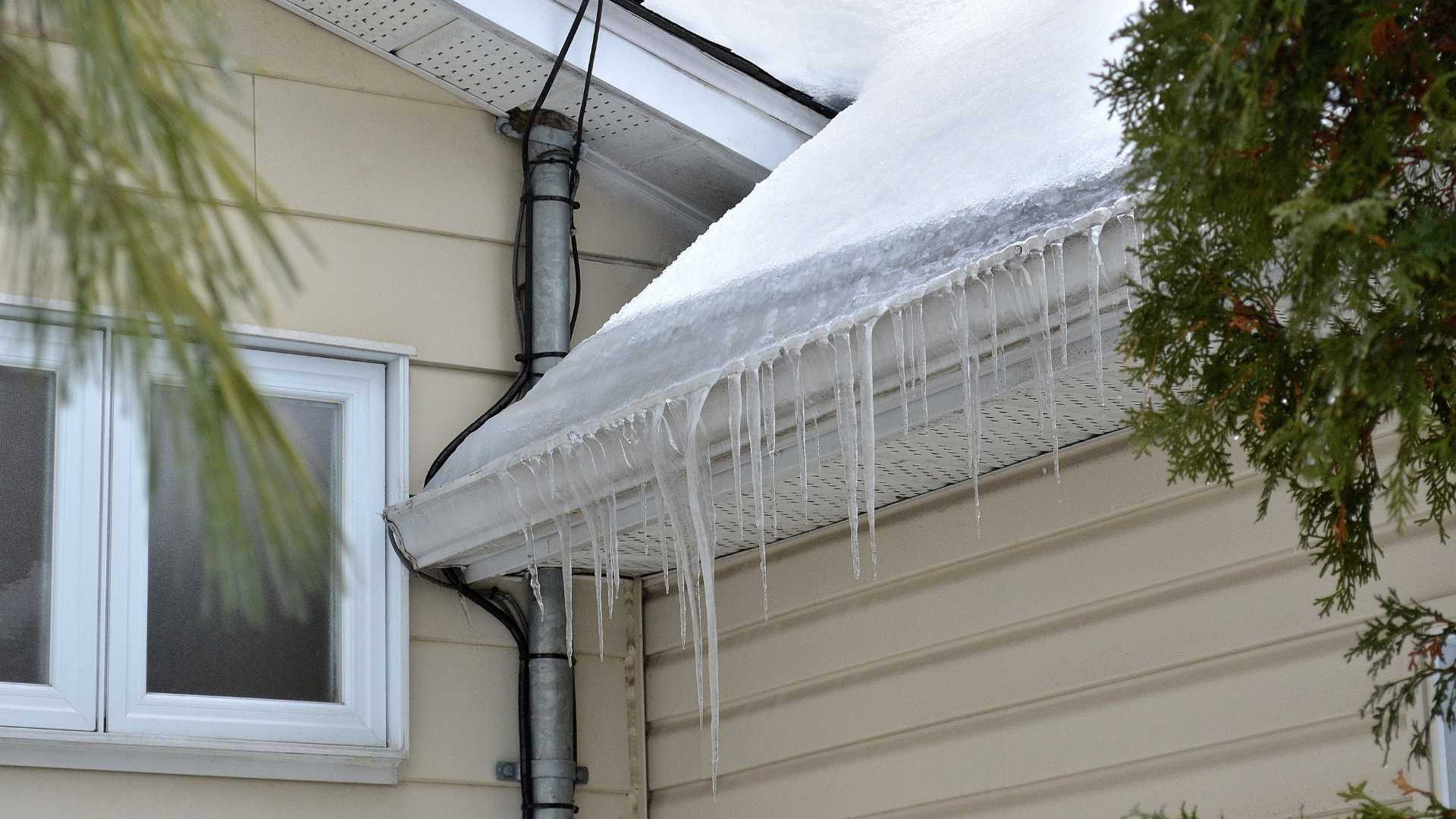
When rain falls on your roof, the water usually has a fairly straightforward journey. It runs down the roofing surface, reaches the eavestroughs, travels towards the downspouts, and drains away from your home.
Winter runoff can be a different story.
In Alberta, snow can sit on a roof for days or even weeks before temperatures rise enough for it to begin melting. When that happens, water may move slowly beneath the snow, follow different routes across the roof, or refreeze before it reaches the eavestroughs. Some of it may reach the gutters as expected, while some may collect near the roof edge, form ice, or drip from places homeowners do not normally associate with drainage problems.
This is why a roof that handles summer rain without any obvious trouble can behave quite differently during winter.
For homeowners in Calgary, Edmonton, and surrounding Alberta communities, understanding how winter roof runoff moves can help explain why ice buildup, overflowing eavestroughs, and unexpected dripping sometimes appear during the colder months.
It also highlights why keeping eavestroughs and downspouts in good condition matters before winter arrives.
Why Winter Runoff Behaves Differently From Rainwater
The biggest difference is that rain usually reaches the roof as liquid water. It can flow over the roofing surface and into the eavestroughs without first needing to melt.
Winter runoff often begins as snow or ice. Before that water can drain, it has to melt. The amount of melting can vary across the roof depending on sunlight, temperature, insulation, roof design, and the condition of the snow.
As a result, winter runoff does not always move in one steady stream.
A sunny afternoon may melt snow on one part of the roof while another section remains frozen. Water may travel underneath the remaining snow, reach a colder area, and freeze again. On another day, a change in temperature may cause a larger amount of snow to melt over a shorter period.
These changing conditions can make winter drainage less predictable than ordinary rainfall.
1. Snow Can Melt Unevenly Across the Roof
One of the main reasons winter runoff behaves differently is that snow does not always melt at the same rate across the entire roof.
Think about a sunny winter afternoon in Calgary. One side of the roof may receive direct sunlight and begin melting, while the shaded side remains covered in snow. The roof surface may also be warmer in some areas than others.
This creates different melting patterns.
Water from a melting section can travel underneath the remaining snow before reaching the roof edge. It may also collect in a lower area or move towards a particular roof section.
Unlike rain, which generally falls across the roof as liquid water, melting snow can release water gradually and unevenly.
For homeowners, this means runoff may appear in places or at times they would not normally expect. You might notice dripping from one section of the eaves while another part of the roof still looks completely frozen.
2. Water Can Travel Beneath Snow Before Reaching the Eavestroughs
When snow starts melting, the water does not necessarily run freely over the top of the snow.
It can move through spaces within the snowpack or along the roofing surface underneath it. Eventually, that water may reach the roof edge and enter the eavestroughs.
However, its journey can change if it encounters a colder section.
For example, water melting on a relatively warm part of the roof may travel towards a colder roof edge. If temperatures are low enough, it can freeze before reaching the gutter or after entering it.
This is one reason homeowners sometimes notice ice around roof edges even when there has not been much fresh snowfall.
The important point is that winter runoff is not always visible while it is moving. A roof may look covered in snow, but melting water could already be travelling beneath it.
3. Roof Edges Can Become Colder Than Other Roof Areas
The roof edge is an important part of winter drainage because it is where melting snow eventually needs to leave the roof.
Depending on the home's construction, insulation, ventilation, and outdoor conditions, roof edges can be colder than sections of the roof closer to the centre.
When melting water reaches a colder area, it may freeze instead of continuing towards the eavestrough.
Over time, repeated melting and refreezing can contribute to ice buildup along the roof edge. In some conditions, this can lead to an ice dam.
An ice dam is a buildup of ice near the roof edge that can restrict the normal movement of melting water. If water collects behind it, there may be a risk of water getting beneath roofing materials.
This is different from an ordinary rainwater drainage issue. During rainfall, water generally moves towards the gutter without having to pass through a layer of snow or navigate around ice.
It is also worth remembering that ice dams are not caused by blocked eavestroughs alone. Roof temperature differences, insulation, ventilation, and other building conditions can contribute to their development.
4. Freeze-Thaw Cycles Can Change the Runoff Path
Alberta homeowners are familiar with winter weather that cannot seem to make up its mind.
A cold spell may be followed by a warmer afternoon. Snow begins melting, water starts moving, and then temperatures drop again overnight.
This repeated change between freezing and thawing is known as a freeze-thaw cycle.
For roof drainage, it means water may have a clear path one afternoon but encounter frozen sections a few hours later.
Consider a typical winter situation:
Snow begins melting during a warmer part of the day.
Water moves towards the roof edge.
Some water reaches the eavestroughs, while some remains trapped around colder areas.
Temperatures fall after sunset.
Remaining water freezes, potentially restricting drainage.
The next warm period produces more melting water.
The cycle can repeat, gradually changing where water collects and how easily it drains.
This is particularly important when eavestroughs or downspouts already have debris, damage, or drainage problems.
Gutter Doctor's eavestrough cleaning service guidance specifically warns that trapped water and wet debris can freeze during local freeze-thaw cycles. The resulting ice buildup can add weight to the system, pull eavestroughs away from the fascia, and create other roof-edge concerns.
5. Blocked Eavestroughs Can Interrupt Winter Runoff
During rainfall, a blocked eavestrough may become noticeable when water spills over the side. Winter blockages can be less obvious because water may freeze before homeowners see where it is going.
Leaves, twigs, dirt, and other debris left inside the gutter can restrict the space available for water to flow through.
The same problem can occur when a downspout is blocked.
Instead of moving through the intended drainage route, melting water may collect in the eavestrough or freeze around the outlet. As temperatures change, the blockage can become more difficult to identify from the ground.
This is why late-fall cleaning matters.
Removing leaves and other debris before winter gives melting water a clearer path through the eavestroughs and downspouts. It does not prevent every possible winter ice problem, but it helps avoid entering the season with an already restricted drainage system.
Gutter Doctor recommends cleaning eavestroughs at least twice a year: once in late spring after seeds and blossoms have dropped and again in late fall after the leaves have fallen. Homes surrounded by dense mature trees may need an additional mid-summer cleaning.
For more information, read Why Winter Gutter Cleaning Matters More Than You Think.
6. Roof Valleys and Different Roof Sections Can Concentrate Runoff
Not every roof has one simple slope leading towards a single gutter run.
Some homes have several roof sections, intersecting slopes, valleys, dormers, and different roof heights. These features influence where rainwater and melting snow travel.
A roof valley, for example, is where two sloping roof sections meet. Water from both sides can move towards this area before continuing down the roof.
During rainfall, this creates a concentrated flow of liquid water.
During winter, the situation can be less consistent. Snow may accumulate differently across each roof section, and melting may begin at different times. Water from one area may reach the valley while another section remains frozen.
This can create a more concentrated flow of meltwater in certain locations.
If that water reaches an eavestrough section that is already restricted or poorly positioned, it may overflow rather than drain as expected.
Homeowners with complex rooflines should therefore pay attention to recurring drainage problems in the same areas. If one section repeatedly develops ice or overflows during snowmelt, it may be worth having the roof drainage arrangement assessed.
You can also learn more about how roof valley design affects gutter performance.
7. Downspouts Can Become the Next Obstacle
Even when melting water reaches the eavestroughs, it still needs somewhere to go.
That is the job of the downspouts.
During ordinary rain, water enters the downspout and travels towards the ground. In winter, however, freezing temperatures can affect the water moving through the outlet and downspout.
If the downspout is already restricted by debris, drainage may become even more difficult. Water can collect near the outlet, freeze, and interfere with the flow of additional meltwater.
This is one reason it is not enough to look at the visible gutter alone.
A gutter system works as a connected route. The eavestroughs collect runoff, and the downspouts carry it away. If either part is not working properly, the overall drainage process can be affected.
Gutter Doctor includes downspout clearing and flushing as part of its eavestrough cleaning service, removing trapped debris, twigs, and sludge so water can drain freely.
For additional information, see How Downspout Cleaning Prevents Water Damage to Your Foundation.
What Homeowners May Notice When Winter Runoff Takes a Different Path
You do not need to see water flowing across the roof to recognise that something may be wrong.
Sometimes, the signs appear around the roof edge, exterior walls, or eavestroughs.
Here are a few things worth watching for during Alberta's winter months.
Unexpected dripping: Water dripping from a roof edge when the nearby eavestrough appears dry may indicate that meltwater is following a different route or freezing before reaching the gutter.
Ice forming around the eaves: Repeated ice buildup near the roof edge can indicate that melting water is freezing before it drains away.
Icicles appearing in the same area: Icicles can form naturally in winter, but repeated or unusually concentrated formation may be worth investigating, particularly if it occurs alongside other drainage concerns.
Water spilling over the gutter: Overflow during a thaw may point to debris, a blocked downspout, poor drainage, or another issue affecting water movement.
Sagging eavestrough sections: Wet debris and ice can add weight to an already vulnerable gutter system. A section that appears lower than usual or is pulling away from the fascia should be assessed.
Water stains around the exterior: Staining on siding or around roof-edge components may indicate repeated water exposure and deserves attention.
These signs do not all point to the same cause. A dripping roof edge, for example, could involve snowmelt, ice buildup, or a roofing concern rather than a gutter blockage. The goal is to notice recurring patterns and have the underlying issue checked rather than assuming every winter water problem has the same explanation.
How to Prepare Your Eavestroughs for Winter Runoff
The best time to prepare your gutter system for winter is before the coldest conditions arrive.
Once snow and ice have settled in, cleaning and repairs can become more difficult. A little attention in fall can help reduce the chance of entering winter with blocked or damaged eavestroughs.
Here are some practical steps homeowners can take.
Clear Leaves and Other Debris
Remove leaves, twigs, dirt, and other buildup from the eavestroughs before winter.
Pay attention to corners, joints, and outlet areas, where debris can collect and restrict water movement.
Check the Downspouts
Make sure downspouts are not visibly damaged or blocked. Water needs a clear route out of the gutter system.
Look for Sagging or Loose Sections
An eavestrough that is already sagging or pulling away from the fascia may be more vulnerable when ice and trapped debris add extra weight.
Have visible attachment problems assessed before winter conditions make repairs harder. If you notice damaged sections, consider professional eavestrough and downspout repair.
Watch for Leaking Joints
If water has been escaping around gutter connections during rainfall, do not ignore the problem. A damaged or leaking joint may need attention before the next period of snowmelt.
Consider Recurring Ice Problems
If the same roof-edge area develops ice every winter, it may be worth looking beyond routine gutter cleaning.
Roof temperature differences, insulation, ventilation, drainage restrictions, and other conditions can contribute to ice dams. A qualified professional can help assess what may be happening.
Gutter Doctor also offers heat cable installation for homes where ice buildup and ice dams are a concern. Heat cables may be one option to discuss when evaluating recurring ice problems, although they are not a guaranteed solution for every roof or drainage situation.
Should You Clean Your Gutters During Winter?
Winter gutter cleaning is not always necessary for every home, and working around icy roof edges can be dangerous. However, a homeowner should not assume that all drainage concerns can wait until spring.
If you notice repeated overflow, unusual ice buildup, or signs of a blocked downspout, it is worth arranging a professional assessment.
Avoid climbing onto a snowy roof or using a ladder on an icy surface to investigate the problem. Removing ice with sharp tools or trying to force frozen water through a downspout can also damage the system.
The safer approach is to identify what is happening from the ground where possible and have difficult-to-access areas checked by someone equipped to work safely.
If the problem is related to debris or a damaged gutter, it may need a different solution from an ice dam caused by roof temperature conditions. Understanding the cause matters before deciding what work is needed.
Frequently Asked Questions
Why does winter roof runoff behave differently from rainwater?
Rain falls as liquid water and generally flows directly across the roof towards the eavestroughs. Winter runoff begins as snow or ice and must melt first. Because melting can happen unevenly, water may travel underneath snow, collect around colder roof sections, or freeze before reaching the gutters.
Can melting snow run underneath snow on a roof?
Yes. As snow melts, water can move through the snowpack or along the roofing surface beneath the remaining snow. It may then reach the roof edge or encounter a colder area where it freezes.
Why does water sometimes drip from the roof when the gutters look dry?
Melting snow may be following a different path across the roof, or water may be freezing before it reaches the eavestroughs. The cause can vary depending on roof conditions, temperature differences, and drainage restrictions.
Can clogged gutters contribute to ice buildup?
Yes. Leaves and other debris can restrict water movement. When trapped water and wet debris freeze during Alberta's freeze-thaw cycles, ice can accumulate and add weight to the gutter system. Gutter Doctor identifies this as a potential cause of gutter separation and other roof-edge damage.
Are ice dams and blocked gutters the same problem?
No. A blocked gutter is a drainage obstruction caused by debris or another restriction in the eavestrough or downspout. An ice dam is a buildup of ice near the roof edge that restricts the movement of melting water. The two can occur together, but they are not the same thing.
Do all Alberta homes need heat cables?
No. Heat cables are not necessary for every home. They may be worth considering where recurring ice buildup or ice dams are a concern. The roof and drainage conditions should be assessed before deciding whether they are appropriate.
When should Alberta homeowners have their eavestroughs cleaned?
Gutter Doctor recommends cleaning eavestroughs at least twice a year, once in late spring after seeds and blossoms drop and again in late fall after the leaves have fallen. Homes with dense mature tree coverage may need an additional mid-summer cleaning.
Can a professional gutter cleaning service check for drainage problems?
Yes. Gutter Doctor's eavestrough cleaning service includes removing debris and clearing and flushing downspouts. The service also identifies visible concerns such as blockages and drainage issues.
Keep Winter Runoff Moving in the Right Direction
Winter roof runoff does not always behave like rainwater. Snow melts unevenly, water can travel beneath remaining snow, colder roof edges can encourage refreezing, and blocked eavestroughs or downspouts can make drainage even more difficult.
For Alberta homeowners, the important thing is to understand that winter drainage problems are not always easy to spot. A gutter may appear fine during summer rainfall but struggle when melting snow and freezing temperatures create different conditions.
Keeping eavestroughs clear, checking downspouts, and addressing visible damage before winter can help your home's drainage system handle seasonal changes more effectively.